
Please read if St Margaret's is on your mind
1 July 2026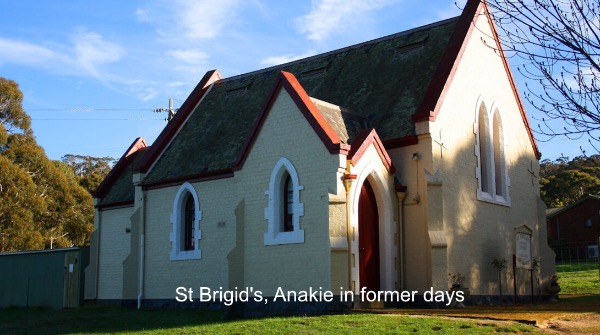
When a Church Closes: A Priest’s Reflection on Leadership, Loss and Hope
Fr. Joseph Panackal Sebastian IVDei
I arrived in Australia 6 years ordained in 2018 as a priest of the Voluntas Dei lnstitute, a secular institute whose spirituality emphasises serving God in the ordinary realities of life and mission. Since then, my pastoral ministry within the Roman Catholic Archdiocese of Melbourne has taken me through several parish communities across Victoria.
My ministry began at St Anthony's Church in Melton South, and St Bernard's Church in Bacchus Marsh. Later I ministered at St Mary's Church in Geelong. For the past four years I have been serving as parish priest of St Joseph's Church in Meredith.
Each parish and each parish priest I encountered along the way shaped me deeply as a priest and pastor. From these communities, I learned the importance of patience in ministry, the value of listening before speaking, and the need for presence among people in both joyful and painful moments of life. I learned that pastoral leadership is not built on authority alone but on trust, relationships, and accompaniment. The wisdom and experience of senior priests, together with the faith and resilience of parishioners, taught me that ministry flourishes when rooted in humility, integrity, and compassion.
Within the parish of Meredith is also the rural faith community of St Brigid's Church in Anakie. Settled among the wide-open landscapes and rural beauty of the district, Anakie carries a quiet and distinctive character. The open fields, rolling countryside, and deep sense of local history give the community a strong connection to both land and faith. St Brigid's Church stood for generations as a spiritual home within this landscape - a simple yet sacred presence among the farms and rural roads of Anakie.
Over the past four years, the people of Anakie have been part of the wider parish journey centered in Meredith. St Brigid's was not simply a building within the parish; it was part of the spiritual identity and memory of the local Catholic community.
A Journey of Consultation and Discernment
Recognising the pastoral realities facing many smaller rural communities, we began a process of consultation and discernment regarding the future of St Brigid's Church. This journey extended over nearly two years. For me, integrity in ministry became essential throughout this process. Difficult decisions require honesty, transparency, and a willingness to remain present even when conversations become painful. Rather than making quick decisions behind closed doors, we sought to walk together as a community.
Consultations were held not only with parishioners, but also with the parish leadership team and the relevant authorities within the archdiocese. Meetings were organised, conversations were encouraged, and people were invited to speak openly about their hopes, concerns, memories, and fears connected with the St. Brigid.
The intention was not simply to inform people about a decision already made, but to involve them genuinely in the process of reflection and discernment.
Through this shared journey of listening, dialogue, prayer, and consultation, the community gradually came to recognise the realities we were facing. ln this way, the eventual decision did not feel imposed from outside, but emerged through a process in which people themselves had a voice.
Inspired by the vision of Archbishop Peter A Comensoli and his invitation to Take the Way of the Gospel, this journey became not only about the closure of a church, but also about discerning the future of mission and community life. The process invited us to listen deeply, walk together with honesty and compassion, and seek new ways of living the Gospel within changing pastoral realities. Even in moments of grief and closure, the Gospel continues to call the Church toward hope and renewal.
A Difficult but Necessary Journey
Leading the process toward the closure of a church has been one of the most significant pastoral responsibilities I have faced in ministry. Closing a church is not simply an administrative act. lt is not only about buildings, finances, maintenance costs, or declining numbers. A church carries memory. lt holds baptisms, weddings, funerals, and countless moments of people of grace where heaven touched the ordinary lives of people. When a church closes, something visible in the landscape of faith comes to an end.
Mixed Emotions in Leadership
Emotionally, this journey has been deepIy mixed. On one hand, l feel a quiet sense of peace that the process was handled respectfully and transparently. There was strong support from many parishioners, which I believe grew through honest conversations, fruitful dialogue and patient listening rather than sudden announcements or imposed decisions.
A long term parishioner, Cambria, who has had long association with St. Brigid’s church, said to me during this process: “We are with you, Father” those simple words carried deep encouragement for me. They reminded me that even in difficult moments, people recognise sincerity, honesty, and pastoral care.
On the other hand, there was also sadness. Even when people understand the reasons for a decision, grief remains. A church building represents generations of faith, prayer, belonging, and family history.
Personally, this process required courage. There is always the possibility of misunderstanding or resistance, and a priest may sometimes be remembered as “the one who closed the church”. I had to confront my own tendency to avoid conflict and instead step forward with clarity, honesty, integrity and pastoral responsibility.
During this period, l also discovered that pastoral care cannot be limited only to church gatherings or formal meetings. ln many ways, pastoral visitation became even more important. Spending time with parishioners in their homes, listening to their stories, sharing tea, praying together, and allowing them space to speak openly became part of accompanying them through grief and transition.
The Pastoral Tension
This experience revealed several pastoral challenges:
- Holding together truth and compassion
- Balancing diocesan responsibility with local attachment
- Allowing space for grief while moving forward responsibly
- Avoiding becoming personally identified with the decision itself
In moments like this, I learned that listening is often more important than explaining. People do not always need persuasion; they need to feel heard.
Leadership in pastoral ministry often means accompanying people patiently through difficult transitions. It also means giving people permission to grieve - permission to feel sadness, disappointment, anger, and loss without judgment. Grief is part of letting go, and pastoral ministry must make room for that human reality.
Carrying the Memory of St Brigid’s
On 26 April 2026, the parish community gathered at St Brigid's Church for a Mass of Thanksgiving celebrating the long history, faith, and witness of the Anakie Catholic community. The Mass was celebrated by Bishop Martin Ashe as the principal celebrant.
Rather than focusing on the deconsecration of the church, the celebration became a moment of thanksgiving - a new pastoral approach to the closure of a church. The emphasis was not simply on ending, but on remembering, honouring, and carrying forward the faith that had been nurtured within St Brigid's for generations.
As part of the liturgy, several sacred symbols and liturgical vessels from St Brigid's were entrusted to other communities within the wider parish family. This gesture symbolised that the spiritual legacy of Anakie would continue to live on in neighbouring faith communities.
Chris Lindolf handed over the statue of St Brigid to Greg Foster, who will place it in St Joseph's Church in Meredith, where the witness of St Brigid will continue to inspire prayer and devotion.
Judy Mclntosh handed over the St Brigid's Cross to Denis Giles, who will place it in St John’s Chapel in Bannockburn as a sign of hope, prayer, and the enduring spirit of the Anakie community.
Margaret Giles handed over the Sacred Chalice to Joe Cusmano, who will bring it to Sacred Heart Church in lnverleigh, where it will continue to be used in the celebration of the Eucharist.
Collin Tucker handed over the ciborium to Eddie Ellis, who will take it to St John the Baptist Church in Winchelsea, where it will continue to serve the people of God in worship and Holy Communion.
These symbolic gestures carried deep meaning for many present. Although the doors of St Brigid's Church may close, its faith, memory, and sacred legacy continue to live on - not only in neighbouring churches across Meredith, Bannockburn, lnverleigh, and Winchelsea, but also in the hearts of those whose lives were shaped by prayer within the walls of St Brigid’s.
This moment revealed that even in closure, there can be continuity; even in letting go, there can be communion; and even in farewell, there can remain deep gratitude and hope.
A Message to Those Who Feel Distant from the Church
One of the most moving moments for me during the Thanksgiving Mass at St Brigid's Church was seeing more than one hundred people gather to pray, remember, and grieve together as the church prepared to close its doors.
Among those present were not only regular parishioners, but also many people who had been away from church life for some time for a variety of personal and deeply human reasons. Some had not entered the church for many years. Yet on that day, they returned.
They came carrying memories. They came carrying sadness. They came because, despite time and distance, St Brigid's still remained part of their story. As I watched people standing quietly in prayer, some with tears in their eyes, I wondered whether a few may have been carrying an unspoken thought within themselves: "Perhaps I should have come back sooner" or "Perhaps my absence also mattered.”
I do not say this to create guilt or blame. The reasons why people drift away from church life are often complex, personal, and shaped by many experiences. The closure of churches also arises from broader pastoral, demographic, and social realities that develop over many years.
Yet this experience reminded me how deeply belonging matters. Faith communities remain alive not simply because of buildings or structures, but because of people who continue to stay connected, support one another, pray together, and share in community life.
One of the reasons I write this reflection is to offer a gentle invitation - especially to those who may feel distant from the Church, uncertain, hurt, disappointed, or disconnected.
If a faith community once nourished your life, if a church holds memories of your family, your baptisms, weddings, funerals, prayers, and hopes, then your presence still matters more than you may realise. Communities are sustained when people continue to participate, belong, and support one another - especially during difficult times.
The closure of St Brigid's became for me not only a moment of grief, but also a quiet reminder of how important it is to cherish and sustain faith communities while they are still alive and gathering. Perhaps one lesson from this experience is this: Do not wait until the final farewell to rediscover the value of belonging.
A Spiritual Lesson
Spiritually, this experience deepened my understanding of what the Church truly is.
The Church is not primarily buildings but the People of God. Yet buildings matter because they carry the memory of sacramental life and community identity. Letting go of a sacred space touches something deeply sacred within the hearts of believers.
During this time I often reflected on the words of Jesus from the Gospel of John:
"Very truly, I tell you, unless a grain of wheat falls into the earth and dies, it remains just a single grain; but if it dies, it bears much fruit." John 12:24
Closure can feel like loss, but it may also become a moment where new forms of mission emerge. Faith communities are always called to adapt while remaining rooted in the Gospel.
Personally, this journey reminded me:
- to surrender outcomes to God
- to trust the wider vision of the Church
- and to remember that I am a steward, not an owner
My ministry in Australia - from Melton South to Bacchus Marsh, from Geelong to Meredith and Anakie - has taught me that the Church is always on pilgrimage.
Some chapters begin. Others come to an end. But Christ continues to walk with His people. The closing of St Brigid's Church does not mark the end of faith in Anakie. Rather, it closes one visible chapter in a long story of faith now entrusted to God's mercy and providence. And as priests, we walk with our people not only in moments of growth and celebration, but also in moments of grief, surrender, and letting go.
The Church building and the land are to be sold with the permission of the Archbishop and Parishioners.
Dated:15th May 2026
Acknowledgements
Courtesy:
Fr. Jim Clarke, (Parish priest of St. Mary's Geelong),
Fr. Greg Bourke (retired priest Director clergy life and ministry, Australia),
Fr. Kevin Hennessy (Spiritual director member of supervision team),
Archbishop Peter A Comensoli,
Bishop Martin Ashe,
Fr. Tony Kerin (Vicar General),
Cath Garner (strategy Coordinator - Take the Way of the Gospel).