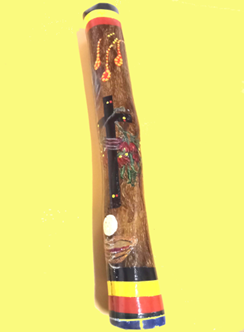
ABORIGINAL MESSAGE STICK
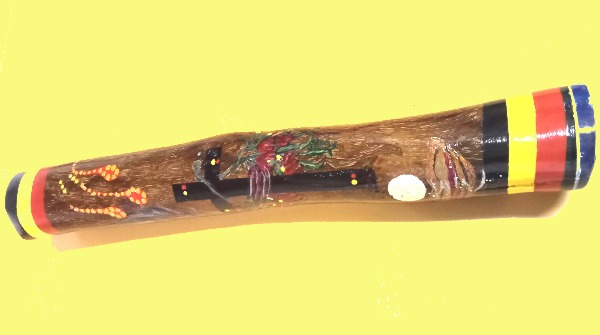
Message Stick by Melissa Brickell
for Our Lady of Perpetual Help Ringwood Parish
Just as the Jews had the Old Testament and the Christians had the New Testament that used written words to record their story, so the Aboriginals used the Message Stick with carved and painted symbols that were readily understood.
When a Message Stick was delivered, it was accompanied with spoken words to make sure the symbols were fully understood.
Similarly in our modern Liturgy of the Word, we read from the Bible and the priest interprets those words for us. In both cases these words enhance the meaning of what we are being given, and the life in the symbols we see.
So with this Aboriginal Message Stick, we have been sent a rich message from the artist Melissa Brickell to ponder on. This includes Aboriginal views of Creation, of God our Father and Mother, and what in many ways are the many similarities between their faith and ours.
The Aboriginal Artists's Interpretation of Images
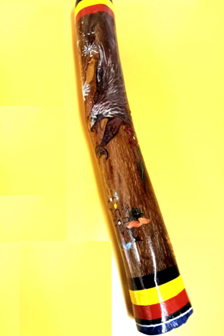
Bunjill the Eagle is Ancient Dreaming / God the Father and Old Testament. Creator and good spirit of Victoria, love, strength and protection.
The Cross is Modern Dreaming / New Testament of Jesus' Suffering - A symbol of God's love and promise to us, protection, strong faith and devotion
Gum Leaves - Used in traditional Aboriginal Ceremony, a vine bearing seeds of love, hope, justice, and clinging to the word; we are equal to nature, we cling to the word; manna gum and food.
Campfire - Smoke is the Holy Spirit / Penitential Rite (top)
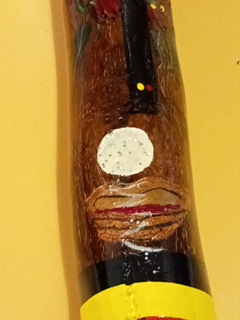
The Coolamon is Offering of the Gifts / Eucharist, Reconciliation and Sharing (bottom)
With the Holy Host above it, it is used for Aboriginal food preparation and gathering, holding and cradling the baby, baptism and waiting for birth.
The Southern Cross is Christ's Guidance / Australia Guidance, journeying, travel, paschal mystery, birth, death and resurrection.
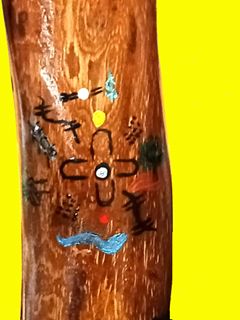
Symbols of Aboriginal Culture and Reconciliation
Message of Forgiveness, Faith, Hope, Love
Symbols of Reconciliation (all at the bottom)
The central white dot is the meeting place;
There are four main Elders/leaders at the meeting;
The three rows of small black dot on either side are others in attendance;
The long line with double lines crossing (11 & 5 o'clock) represent the journey they're taking together and issues being discussed;
These issues are:
(left at 10 o'clock) = justice rights;
(top at 12 o'clock) = black and white people, equity and equality rights including economic rights;
(right at 3 o'clock) = land rights and sacred sites;
(left at 9 o'clock) = respect for one another symbolised by handshake and agreement;
The large red dot are issues partially met, but considered 'unfinished business'.
Melissa Brickell - June 2025